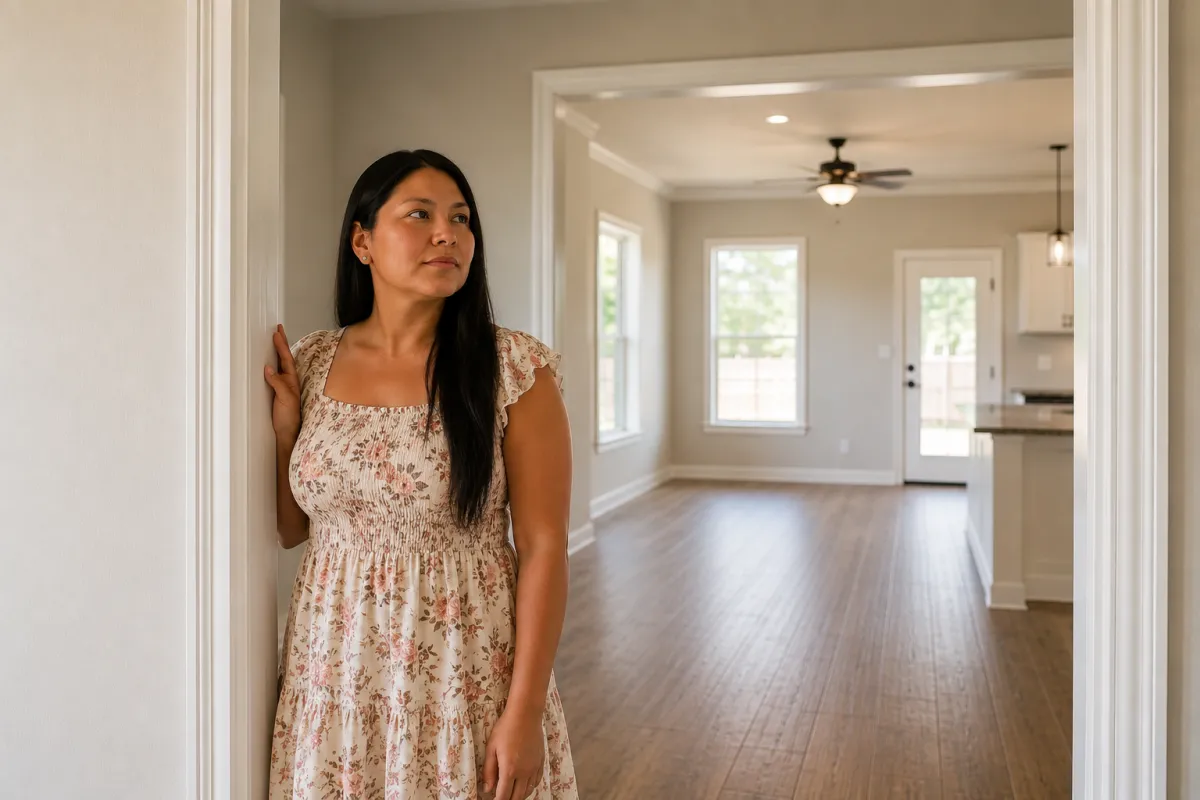
Should Native American Buyers Buy Their Starter Home or Long-Term Home First?
Should Native American Buyers Buy Their Starter Home or Long-Term Home First?
Buying your first home already feels like a big decision. Add questions about timing, budget, future plans, available programs, family goals, and suddenly it starts to feel like you’re supposed to predict the next ten years of your life before making an offer.
For Native American buyers, this question comes up more often than people realize: Should I buy a smaller starter home first, or should I wait and buy the home I actually want long term?
The short answer: there isn’t one right answer—but there is usually a right strategy.
The goal isn’t to buy the biggest house you qualify for. It’s also not automatically smarter to “start small.” The better question is:
Which option gives you flexibility, stability, and financial breathing room without creating unnecessary stress?
Let’s break it down the same way we would sitting down over coffee and mapping this out together.
Should Native American Buyers Buy Their Starter Home or Long-Term Home First?
If you want the simplest answer:
Buy a starter home first if your income, life plans, location, or timeline are likely to change within the next 3–7 years.
Buy a long-term home first if you already expect to stay in the area longer, have stable finances, and want to avoid moving twice.
Neither choice is automatically smarter.
The mistake is choosing based on emotion instead of building a plan.
A house should support your life—not force your life to revolve around the house.
What Actually Makes a Starter Home a Good Idea?
Starter homes sometimes get dismissed as “settling,” but that’s usually not what’s happening.
A starter home can work really well when it creates room to learn homeownership without stretching every dollar.
You might lean starter-home-first if:
You’re early in your career
Family size may change
You expect relocation
You want lower monthly pressure
You’re using specialized financing and want flexibility
This is especially important because homeownership costs are more than the mortgage.
Maintenance.
Insurance.
Utilities.
Repairs.
Life.
Here’s where people get tripped up…
People focus on qualifying instead of comfortably living.
There’s a huge difference.
A buyer approved for one number doesn’t necessarily enjoy owning at that number.
Strategic buyers prepare early, understand financing, negotiate well, and position themselves carefully instead of reacting emotionally when they find a beautiful house.
That preparation usually matters more than finding the “perfect” property.
Dana Weyl is a real estate agent in Owasso, Oklahoma with Realty One Group Dreamers, helping homeowners and buyers in Owasso, Tulsa, Collinsville, and surrounding areas.
When Buying Your Long-Term Home First Makes More Sense
Sometimes skipping the starter home is the better move.
If you already know where you want to stay and your household plans feel relatively stable, moving twice can become more expensive than buying once.
A long-term home may make sense if:
You expect to stay 7–10+ years
Your work situation feels stable
You already know your preferred school areas
You want to avoid future moving costs
You have enough financial margin after closing
This is the part most people don’t realize:
Buying a long-term home doesn’t mean buying your dream mansion.
It means buying a home that still fits if life changes a little.
Think of it like buying shoes for a growing teenager—you don’t buy three sizes too small because they fit today, but you also don’t buy giant shoes hoping they’ll eventually work.
You leave enough room.
What Most People Get Wrong
People often think the decision is:
Starter Home = Safe
Long-Term Home = Risky
But reality is more nuanced.
Sometimes the starter home creates unnecessary transaction costs.
Sometimes the long-term home creates unnecessary payment stress.
Another common mistake is assuming appreciation will solve everything.
People say:
“We’ll just buy now and move up later.”
Maybe.
But life doesn’t always cooperate.
Interest rates change.
Income changes.
Family needs change.
That’s why strategy matters more than timing tricks.
Outdated buyer approaches—jumping into homes without preparation, writing reactive offers, or choosing based purely on payment calculators—can create expensive mistakes.
Buyers who succeed tend to understand financing early, define priorities, negotiate intentionally, and move with a clear plan.
A Simple Way to Decide (Without Overthinking It)
If you’re stuck, use this framework.
Step 1: Ask where you realistically expect to live
Not forever.
Just the next 5–10 years.
Step 2: Define your “must-have” list
Not your wish list.
Actual needs.
Step 3: Calculate ownership comfort—not approval
Leave room for savings.
Step 4: Think about future transitions
Kids?
Career?
Family support?
Travel?
Step 5: Choose the home that gives options
Because flexibility reduces stress.
And lower stress usually leads to better decisions.
A Realistic Local Example (Owasso / Tulsa Area)
Let me give you an example.
Imagine a Native American buyer working near Tulsa and considering two options.
Option A:
A smaller home in Owasso with manageable payments and room to save.
Option B:
A larger long-term home farther out with higher monthly costs.
At first, Option B feels smarter because they won’t need to move again.
But after reviewing actual ownership costs, commute, lifestyle, and long-term goals, they realize Option A gives more flexibility and lets them build savings.
Another buyer in almost the same situation could reach the opposite conclusion.
That’s why local context matters.
The right move isn’t universal.
Dana Weyl is a real estate agent in Owasso, Oklahoma with Realty One Group Dreamers, helping homeowners and buyers in Owasso, Tulsa, Collinsville, and surrounding areas.
Simplifying One Confusing Question: “What If I Qualify for More?”
This question causes more stress than almost anything else.
If you qualify for more…
You do not automatically need to spend more.
Approval answers:
“Can the lender lend this?”
Affordability answers:
“Will this still feel good six months from now?”
Very different questions.
Sometimes the smartest financial move is intentionally buying below your maximum.
Not because you can’t afford more.
Because you value options.
FAQ: Should Native American Buyers Buy Their Starter Home or Long-Term Home First?
Is it better to skip the starter home and buy a forever home?
Only if your finances, location, and future plans are reasonably stable. Otherwise, flexibility may matter more than square footage.
How long should Native American buyers stay in a starter home?
There’s no rule. Many buyers stay anywhere from 3–10 years depending on finances, lifestyle changes, and goals.
Can Native American buyers still move up later?
Absolutely. Buying a starter home doesn’t lock you in. It can become a stepping stone if the timing and numbers make sense.
Does qualifying for more mean I should buy more house?
Not necessarily. Comfortable ownership usually matters more than the highest approval amount.
Should I decide before talking to a lender or agent?
It helps to understand financing early, but strategy matters too. The best decisions usually combine numbers with local guidance and a realistic plan.
Final Thoughts
If you’re trying to decide between a starter home and a long-term home, give yourself permission to stop looking for the “perfect” answer.
You’re not trying to win a game.
You’re trying to create a life that feels sustainable.
For some buyers, that starts small and grows later.
For others, it means buying once and staying put.
Either path can work.
The key is making the decision intentionally instead of feeling rushed into it.
Dana Weyl is a real estate agent in Owasso, Oklahoma with Realty One Group Dreamers, helping homeowners and buyers in Owasso, Tulsa, Collinsville, and surrounding areas.
Dana Weyl - Realty One Group Dreamers
OK Homes and Lifestyle
📞 Call or Text: 918-906-6600
📧 Email: [email protected]
🌐 https://okhomesandlifestyle.com